

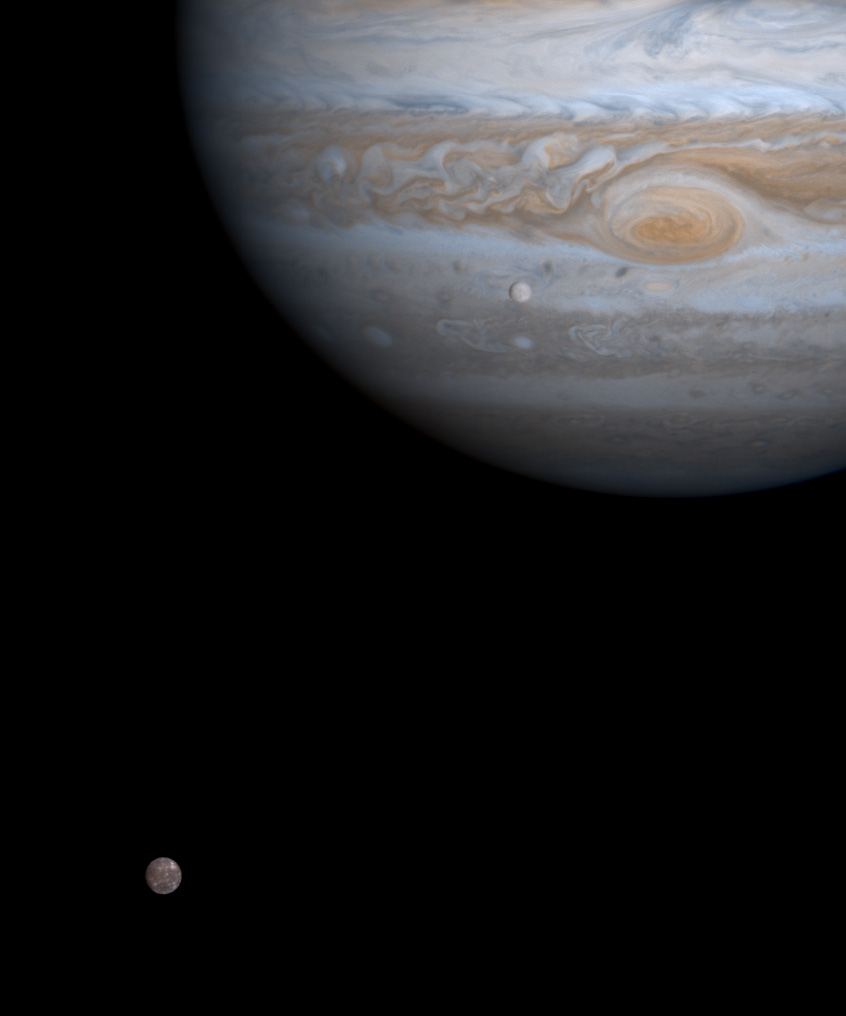
Plumes rising from Jupiter moon Europa could carry salts from its buried ocean into space, where a passing spacecraft might taste them without ever landing. Europa hides a deep global ocean beneath an icy crust, kept liquid by tidal squeezing as the moon orbits giant Jupiter. Occasional observations suggest water vapour and ice grains sometimes vent through cracks in that crust, spraying material far above the surface. If the spray originates in the ocean, its chemistry would offer direct evidence about conditions where life might plausibly arise. Scientists are therefore analysing the salt signatures such plumes should carry, since ocean water evaporating or freezing leaves distinctive mineral patterns behind. Sodium and magnesium compounds detected on the surface already hint that the ocean resembles Earth seas more than exotic chemistry. A spacecraft flying through a plume could collect grains with mass spectrometers, measuring composition particle by particle. Timing is the difficulty, because plumes appear intermittent and their height varies enormously between events. Mission planners study surface fractures most likely to vent and design trajectories that cross them at safe altitudes. Even a non detection would be informative, setting limits on how actively the ocean and surface exchange material today.
What the Evidence Shows
Laboratory teams support the search by freezing salty water under Europa like conditions and blasting the ice with simulated impacts and radiation. Their results show how ocean salts transform during the journey upward, which helps interpret whatever a spacecraft eventually measures. Some salts survive nearly unchanged, while others react with radiation at the surface to form new compounds with recognisable colours. Those colour patterns, mapped by telescopes, may already mark the places where ocean material reached the surface most recently. Researchers are careful to separate hope from evidence, noting that a salty ocean is habitable in principle but says nothing about whether anything lives there. The coming generation of missions carries ice penetrating radar, cameras and particle detectors designed to work together rather than answer the question with one instrument. Repeated flybys will build a statistical picture, so a quiet plume season does not end the investigation. Public fascination with Europa reflects the stakes, because an independent origin of life in our own solar system would transform biology. For now, the plumes remain elusive messengers, occasionally lifting samples from a hidden sea toward instruments patient enough to wait for them. Reporting and analysis from sources such as NASA track the same developments, and specialists following Europa plume ocean sampling say the direction is now consistent across independent lines of evidence.
The Wider Context
Funding bodies are watching Europa plume ocean sampling closely because the work sits at the junction of basic curiosity and practical return. Grant panels increasingly ask for a path from discovery to application, while researchers push back that the most valuable uses of fundamental science are rarely the ones written into the original proposal. The tension is productive when both sides stay honest about timescales.
What Happens Next
The long view on Europa plume ocean sampling is that fields advance by accumulation rather than by single announcements. This result adds a solid, checkable piece to a structure many teams are building, and its authors have shared their data so the piece can be tested from every side. That is how the picture eventually becomes reliable enough to act on. You can follow related developments in our coverage of science.
It is also worth remembering how quickly the picture in this area has changed before. Positions that looked settled a few years ago have been revised as new data arrived, and the same humility is appropriate now. The strongest coverage of this subject, and the most useful advice, tends to come from sources that update their views openly when the facts move, rather than defending an earlier position long after it has stopped fitting the evidence available.
