

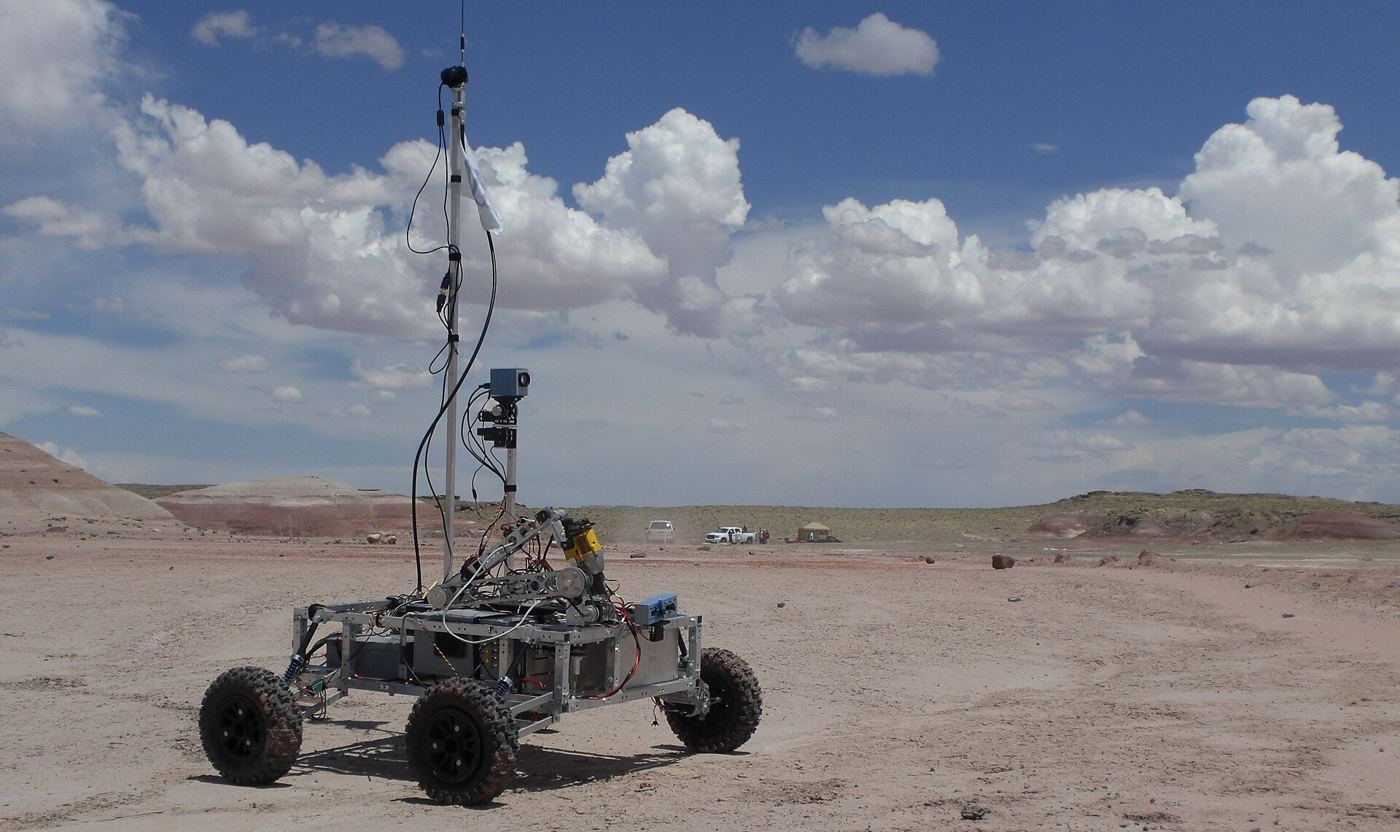
NASA’s Perseverance rover has collected its first Martian rock sample in more than a year, the agency announced on 9 November 2026. The sample, named Singita, was drilled on 24 October 2026 in the Lac de Charmes area west of Jezero Crater, after the rover travelled about 100 metres to a patch of light-toned rocks. The drill made it about 3.1 centimetres into the rock, and the core was confirmed inside its sampling tube by an image from the Mastcam-Z camera. It was Perseverance’s 66th successful abrasion on Mars. NASA says the sample has potential biosignatures, meaning chemical compounds and minerals that together may have been formed by past microbial life, although detailed study will be needed to establish its precise history.
What the Evidence Shows
Singita may be among the oldest rocks in the rover’s collection. Its textures suggest it likely formed deep in the crust as gabbro, an igneous rock made mostly of calcium-rich plagioclase feldspar and pyroxene crystals, and was modified by at least one large impact event. The sample remains stored inside the rover, awaiting a possible return to Earth. On 9 November NASA also began a new study, the Perseverance Sample Retrieval Architecture, to find a less costly way of bringing the samples home, with a strategy team starting in January 2027. The rover has now collected 30 of its 38 sample tubes by NASA’s count. Further study will be needed to establish its precise chronology. Reporting and analysis from sources such as Nature track the same developments, and specialists following the Perseverance Singita Mars sample say the direction is now consistent across independent lines of evidence.
The Wider Context
The wider context is a research landscape in which replication and open data now decide reputations. Findings connected to the Perseverance Singita Mars sample are being checked by independent groups with shared datasets, and the teams involved publish their methods in full so rivals can test every step. That discipline is slower than a headline cycle, but it is why results in this area increasingly survive first contact with scrutiny.
What Happens Next
What happens next in the story of the Perseverance Singita Mars sample will be decided by follow-up work already under way: larger samples, longer observation and instruments that have not yet come online. The researchers involved are unusually united on one point, that the current results justify the next investment of time and money. Readers will not have to wait long for the first tests of that claim. You can follow related developments in our coverage of science.
None of this will be settled by a single announcement, study or product launch. The pattern to watch is accumulation: independent confirmations, honest reporting of failures and steady improvement in the underlying numbers. Readers who follow those signals, rather than the loudest claim of the week, will understand this subject better than most of the commentary surrounding it suggests is possible.
