

For a technology publisher, a backlink can look like a win in a report and still add little value to readers or search visibility. The difference often comes down to link building quality control: checking the relevance, placement and editorial integrity of a link before and after it is acquired. That matters whether a site covers mobile releases, gaming hardware, app updates or broader technology news, where inaccurate claims and irrelevant recommendations can quickly undermine trust.
Outsourcing link building does not remove the publisher’s responsibility for the finished work. A freelancer, agency or marketplace provider may handle research and outreach, but the site owner should set standards, review evidence and decide what is acceptable. A clear process helps teams avoid paying for placements that look impressive in a spreadsheet but have no credible connection to the audience.
Define quality before outreach begins
Quality is more than a website’s authority score or monthly traffic estimate. Those figures can help with early screening, but they do not show whether a site publishes useful material, reaches genuine readers or is relevant to your subject. A gaming site covering console updates may be a sensible fit for a report on game-streaming technology; a general directory with no editorial focus is harder to justify.
Before a campaign starts, write down what a suitable placement looks like. Include the topics and audiences that matter, acceptable types of pages, geographic or language requirements, and any sites or practices to avoid. Set expectations for natural anchor text and disclose whether links must be marked as sponsored or otherwise qualified under your publishing policy. The more specific the brief, the less room there is for a provider to interpret “good link” as simply “link that can be bought.”
Check the publication, not just the metrics
Review a potential site as a reader would. Does it publish original articles on a consistent subject? Are recent posts useful and edited, or do they appear to exist mainly to host outside links? Look at several pages, not only the one proposed for your link. A site with unrelated topics, repeated thin articles and a large number of commercial anchors may carry risk even if a third-party metric looks strong.
Then assess the actual placement. The link should fit naturally in a sentence that helps explain a point, rather than appearing in a list of unrelated recommendations. The surrounding article should be readable, accurate and relevant to the destination. For tech coverage, check that product names, specifications, software versions and dates are correct. A link in a poorly researched article can associate your brand with claims you would not publish yourself.
Use a documented review workflow
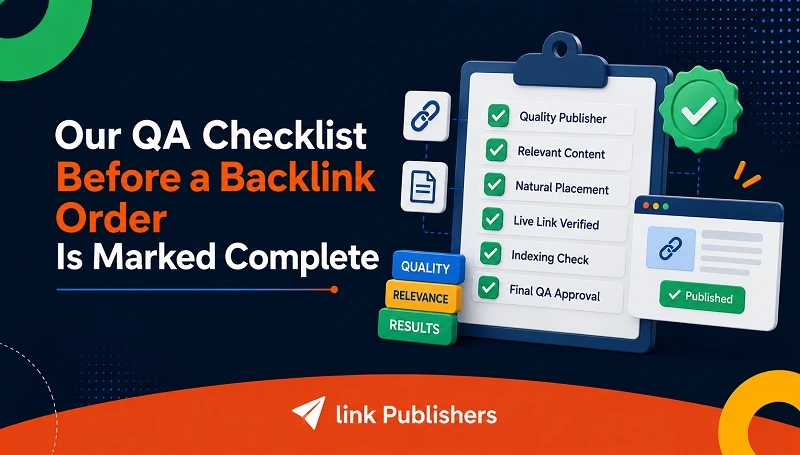
A simple approval process can catch common problems without slowing a campaign to a crawl. Ask the provider to submit proposed domains and page ideas before publication. For each opportunity, record the target URL, proposed anchor, page topic, placement type and any fee. Review the final live page against the approved version, since the headline, copy or link attributes may change before publication.
- Screen: Check the site’s topic, recent publishing history and signs of genuine editorial activity.
- Approve: Confirm the page idea and link context before anyone commits to a placement.
- Verify: Inspect the live page for correct destination, working link, natural wording and appropriate disclosure.
- Monitor: Recheck important placements periodically for removed links, changed content or site deterioration.
Keep records of rejected opportunities as well as successful ones. They help refine the brief and make it easier to identify recurring issues, such as repeated use of exact-match anchors or placements on sites outside the campaign’s subject area.
Choose the right outsourcing model
Different teams need different levels of control. An in-house specialist offers direct oversight but requires time and expertise. A freelancer can provide focused support, while an agency may manage a larger campaign with more process. A marketplace can help buyers compare independent providers, but it still takes a clear brief and careful review to select the right fit. This comparison of outsourcing models is useful for thinking through those trade-offs before assigning a campaign.
Whichever route you choose, ask how prospects are found, what evidence is supplied for each placement, and whether the provider will accept your approval rules. Be cautious of guaranteed rankings or large quantities of links delivered on a fixed timetable. Search outcomes depend on many factors, and a volume promise can encourage shortcuts that compromise editorial standards.
Why creative briefs matter across freelance work
The same principle applies beyond SEO. When commissioning food product photography, a business gets better results by sharing its intended audience, image use and style requirements, then comparing portfolios against that brief. Osdire is one freelance marketplace where buyers can review services across categories; the broader lesson is that a marketplace does not replace a useful specification or a final quality check. Link building needs the same discipline: define the outcome, assess the work itself and approve only what meets the standard.
Keep the reader as the final test
Before accepting a placement, ask whether it makes sense to a person who arrives without knowing anything about the campaign. If the link adds context, points to a genuinely helpful resource and sits on a credible publication, it may support both discovery and reputation. If it exists only to manipulate a metric, reconsider it. Consistent link building quality control is not a guarantee of search performance, but it gives tech publishers a defensible process for protecting reader trust while working with outside specialists.
