

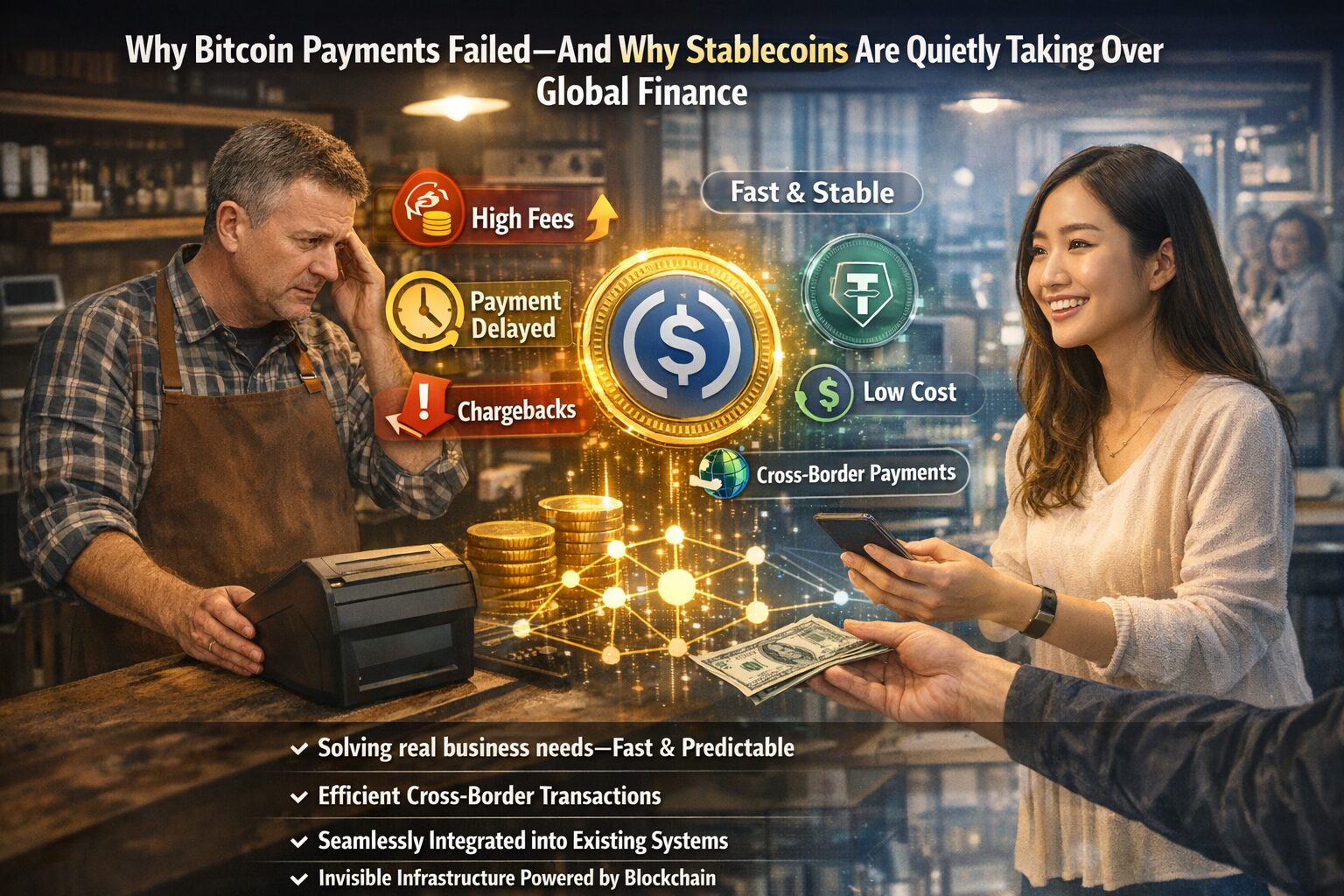
Over the past decade, few financial assets have attracted as much attention — or as much skepticism — as cryptocurrency. Bitcoin spent years in the popular imagination as either a get-rich-quick vehicle or an elaborate experiment, while stablecoins were dismissed by many as a niche tool for traders moving between exchanges. That framing has aged poorly. In 2026, the conversation has shifted decisively from “what could crypto be worth?” to “what can crypto actually do?” — and the emerging answer is reshaping entire industries.
The Long Road to Mainstream Legitimacy
Bitcoin’s trajectory from a whitepaper posted to an obscure cryptography mailing list in 2008 to a treasury-grade asset held by public companies, pension funds, and sovereign reserves has been anything but linear. Originally conceived as a peer-to-peer electronic cash system, Bitcoin has survived multiple 80%-plus drawdowns, regulatory crackdowns in major jurisdictions, and repeated obituaries from mainstream financial media.
What changed was not the technology itself but the infrastructure around it. Regulated custody solutions, spot exchange-traded products, and institutional-grade settlement networks have turned Bitcoin into something closer to a utility than a pure speculation. Corporate balance sheets now list it alongside cash and short-duration Treasuries. Sovereign wealth funds quietly accumulate positions. None of this was plausible five years ago.
Stablecoins: The Quiet Revolution in Payments
While Bitcoin captures headlines, stablecoins have arguably done more to change how money actually moves. A stablecoin is a digital asset pegged to a reference currency — most commonly the US dollar — and backed by reserves that keep its value stable. On-chain, it behaves like a dollar that can be transferred anywhere in the world in seconds, twenty-four hours a day, for fractions of a cent.
The implications are larger than they first appear. Traditional correspondent banking settles cross-border payments in days, not minutes, and imposes fees that make small-value transfers uneconomic. Stablecoins collapse that friction to near zero. The result is that annual stablecoin transfer volumes now rival — and in some measurements exceed — the settlement volume of major card networks. What started as a convenience for crypto traders has quietly become a parallel payments rail serving remittance corridors, B2B settlement, freelance payouts, and increasingly, consumer-facing services.
Why Real-World Use Cases Matter More Than Price Charts
Critics have long argued that crypto lacks a meaningful “use case.” That argument is increasingly difficult to sustain. The more informative question is no longer whether people use digital assets, but where they use them first.
Historically, new payment technologies have gained traction in sectors where existing rails are most inadequate. Card networks grew up around travel and mail-order purchases. Mobile wallets took off in markets with poor card penetration. Digital assets are following the same pattern, finding early product-market fit in verticals where traditional banking is slow, expensive, restrictive, or simply unavailable to certain customers. Cross-border commerce, creator monetisation, and online gaming all fit that profile.
Online Gaming as a Proving Ground for Crypto Rails
Of the industries that have adopted digital assets at scale, online gaming — and online poker in particular — is one of the most instructive. The sector has always had a complicated relationship with banks. Chargebacks, blocked transactions, multi-day withdrawal delays, and punitive foreign exchange spreads have historically been the norm. For operators, these are cost centres; for players, they are a source of constant friction.
Cryptocurrency and stablecoin deposits eliminate most of those pain points in a single stroke. A deposit that previously required a credit card, a copy of a passport, a bank statement, and seventy-two hours of waiting can now be completed in under ten minutes with on-chain confirmation. Withdrawals settle the same way. For operators, the reduced reliance on card processors translates directly into lower fees and fewer disputes. For players, it means actual custody of their own bankroll and far shorter cycles between sessions and cashouts.
The Rise of Crypto Poker and Instant Settlement
Poker in particular has become a showcase for how digital assets can modernise a legacy vertical. Modern crypto poker platforms such as ACR Poker allow players to fund accounts, grind cash games or multi-table tournaments, and cash out winnings using Bitcoin, Ethereum, and major stablecoins — often within a single session. That shift has tangible consequences for the competitive ecosystem.
Professional and semi-professional players, who were historically penalised by slow withdrawal cycles that tied up working capital, can now redeploy funds across games and sites with near-instant settlement. Recreational players benefit from transparent fees and a deposit experience that resembles sending a text message rather than applying for credit. International players in markets underserved by traditional processors gain access that was, in practical terms, closed to them a decade ago.
The second-order effect is equally important. As liquidity aggregates on platforms with efficient crypto rails, game quality and tournament guarantees improve, drawing in more players and reinforcing the cycle. This is the same network effect that built every major payments business of the last fifty years — only compressed into a much shorter timeframe.
What This Means for Operators Outside Gaming
The lesson for operators outside of gaming is that the cost of integrating digital-asset payments has fallen dramatically. Off-the-shelf providers now handle compliance, custody, fiat conversion, and accounting, removing most of the operational burden that made early integrations prohibitive. Any business with meaningful cross-border exposure, microtransaction volume, or underbanked customer segments should be evaluating stablecoin rails seriously rather than treating them as a future consideration.
The competitive pressure is real. Firms that integrate early tend to capture the most price-sensitive users first — the segment for whom a 3% card processing fee or a three-day settlement window is not a minor inconvenience but a deciding factor. Once those users migrate, they rarely return to slower rails.
What This Means for Users
For users, the practical implication is that holding a small balance of stablecoins increasingly delivers utility beyond speculation. Whether paying international contractors, moving funds between services, or funding entertainment spend, the friction savings compound quickly. The learning curve — setting up a reputable wallet, understanding basic security hygiene, knowing which networks carry which assets — is meaningfully lower than it was even two years ago, thanks to improvements in wallet UX and broader cultural familiarity with the underlying concepts.
The Road Ahead
The narrative around cryptocurrency has always moved in cycles of euphoria and disillusionment. The more important story — visible once the noise is filtered out — is one of steady infrastructure maturation. Bitcoin has become a credible store of value. Stablecoins have become a credible settlement medium. And verticals like online poker are quietly demonstrating what mainstream adoption actually looks like in practice: faster settlement, lower fees, genuine user custody, and access for populations that were previously excluded.
The next few years will determine how far these rails extend into everyday commerce. Based on current trajectories, the more interesting question is not whether digital assets will be part of the mainstream financial stack, but which industries will be the last to integrate them — and what that delay will cost them.
