

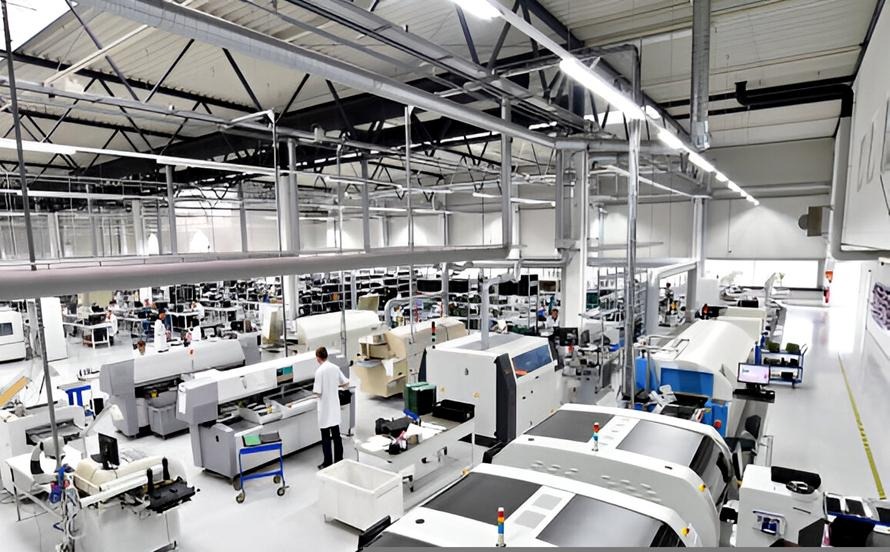
Printed circuit boards (PCBs) are essential to modern electronics, providing the electrical pathways and physical foundation required to connect and operate electronic components. As electronic products become more specialized, manufacturers increasingly require circuit boards that meet specific design, performance, and application requirements. Custom PCB assembly addresses these needs by combining tailored circuit board designs with appropriate components, assembly techniques, and quality control procedures.
Unlike standard electronic assemblies designed for general-purpose applications, customized PCB solutions are developed around a product’s unique specifications. These may include unusual board dimensions, specialized components, particular electrical characteristics, or demanding operating conditions. From industrial automation equipment to medical electronics and communication systems, custom assembly helps businesses develop products that meet their technical objectives while maintaining reliable performance.
What Is Custom PCB Assembly?
Custom PCB assembly is the process of mounting and soldering electronic components onto a printed circuit board according to the specific requirements of a product or project. The assembly may involve a customer-provided design or engineering support to refine the board layout, component selection, and manufacturing approach.
Depending on the application, a customized PCB assembly may use surface-mount technology (SMT), through-hole technology (THT), or a combination of both. The selected process depends on component types, board complexity, electrical requirements, production volume, and mechanical considerations.
Custom assemblies can also incorporate specialized materials, multilayer designs, fine-pitch components, high-power devices, and specific testing requirements. This flexibility makes customized PCB manufacturing suitable for products that cannot be adequately served by standard circuit board solutions.
How Does the Custom PCB Assembly Process Work?
A structured manufacturing workflow helps ensure that the finished assembly meets the design specifications and intended performance requirements.
1. Design Review and Requirement Analysis
The process begins with an evaluation of the product’s technical requirements. These may include operating voltage, current capacity, signal integrity, environmental conditions, component placement, board dimensions, and expected production quantities.
Manufacturers review the design files, bill of materials (BOM), Gerber files, assembly drawings, and component placement data. A design-for-manufacturing (DFM) review can identify potential issues such as insufficient component spacing, unsuitable footprints, or difficult-to-manufacture features before production begins.
Addressing these issues early helps minimize manufacturing errors, unnecessary revisions, and additional costs.
2. PCB Fabrication and Material Selection
Once the design is approved, the circuit board is fabricated using materials and manufacturing processes appropriate for the application. Standard FR-4 is widely used for general electronics, while specialized applications may require flexible substrates, metal-core boards, high-frequency laminates, or other materials.
The number of layers, copper thickness, surface finish, and board dimensions are selected according to the electrical, thermal, and mechanical requirements.
Accurate fabrication provides a reliable foundation for component mounting and helps ensure that the assembled board performs as intended.
3. Component Procurement and Verification
Component selection plays an important role in custom electronic assembly. Manufacturers source the required resistors, capacitors, integrated circuits, connectors, semiconductors, and other electronic parts according to the approved BOM.
Before assembly, components should be checked for correct part numbers, specifications, package types, and availability. Suitable alternatives may be considered when components are unavailable, but substitutions should receive appropriate engineering approval.
Effective component management reduces procurement risks and helps maintain consistency across production batches.
4. Component Placement and Soldering
The assembly stage involves placing electronic components onto the fabricated PCB and establishing reliable electrical connections.
SMT is commonly used for compact components and high-density circuit designs. Automated pick-and-place machines position components accurately, while reflow soldering forms the required connections.
Through-hole assembly is suitable for components with leads inserted through drilled holes, particularly where mechanical support or specific component designs make this method appropriate. Mixed-technology assemblies combine SMT and through-hole processes when the product requires both.
The manufacturing method is selected according to the board design, component specifications, and required production efficiency.
5. Inspection and Testing
After assembly, the completed boards undergo appropriate inspection and testing procedures. Automated optical inspection (AOI) can identify component placement issues and visible soldering defects, while X-ray inspection may be useful for inspecting hidden solder joints in certain component packages.
Electrical testing and functional verification help determine whether the board meets its specified requirements. Depending on the product, manufacturers may also perform in-circuit testing, environmental testing, or other specialized evaluations.
A suitable quality control plan helps identify defects, improve production consistency, and reduce the risk of failures after delivery.
Key Benefits of Custom PCB Assembly
Customized assembly offers several advantages for businesses developing specialized electronic products.
Design Flexibility
One of the main advantages is the ability to tailor the board to specific product requirements. Engineers can select appropriate components, optimize circuit layouts, and determine the necessary board dimensions, layer configurations, and connection methods.
This flexibility supports specialized applications that require more than a standard PCB design can provide.
Improved Product Performance
A customized assembly can be designed around the electrical and thermal requirements of the intended application. Proper component selection, layout optimization, grounding, and thermal management can help improve signal quality, power distribution, and overall circuit performance.
Actual results depend on engineering decisions, material properties, component quality, and manufacturing accuracy.
Better Integration
Custom circuit boards can integrate multiple electronic functions into a single assembly. This may reduce the need for separate modules, simplify wiring, and support more compact product designs.
Such integration is valuable for equipment with strict space limitations or complex electronic requirements.
Support for Prototypes and Production
Customized assembly supports different stages of product development, including engineering prototypes, design validation, pilot production, and larger manufacturing runs.
Early prototypes help engineers evaluate functionality and identify problems before production scales up. Once the design is validated, manufacturing processes can be adjusted to support consistent output and changing demand.
Application-Specific Reliability
Different products face different operating conditions. Industrial equipment may experience vibration, while power electronics may generate substantial heat. Communication devices may require careful control of signal integrity.
Custom assembly allows engineers to account for these factors during design and manufacturing. Reliability still depends on suitable materials, component ratings, testing, and adherence to relevant industry standards.
Common Applications of Custom PCB Assembly
Customized circuit board assembly is used across a wide range of industries.
Industrial automation: Control boards, motor drives, sensors, and monitoring systems often require specific electrical interfaces and mechanical configurations.
Medical electronics: Diagnostic instruments, monitoring devices, and specialized medical equipment may require carefully designed assemblies and rigorous quality controls. Applicable regulatory and safety requirements must be considered.
Automotive electronics: Electronic control units, sensor systems, and power management circuits may use customized boards designed for particular vehicle functions and operating conditions.
Telecommunications: Networking equipment, signal-processing circuits, and communication modules can require specialized layouts and components to support their performance requirements.
Consumer electronics: Smart home products, connected devices, audio equipment, and other electronic products often rely on custom assemblies to meet size, functionality, and cost targets.
Power electronics: Inverters, converters, battery management systems, and power supplies may need tailored circuit layouts, suitable copper thicknesses, and effective thermal management.
Factors to Consider When Selecting a Custom PCB Assembly Manufacturer
Choosing an appropriate manufacturing partner is essential for controlling costs and achieving consistent product quality.
First, review the manufacturer’s technical capabilities, including supported board types, layer counts, component packages, soldering processes, and production volumes. The manufacturer should be able to accommodate the project’s actual design requirements.
Second, evaluate component sourcing practices. Access to reliable suppliers and effective counterfeit-prevention procedures can help protect product quality and supply continuity.
Third, examine the manufacturer’s inspection and testing capabilities. The available quality control methods should match the complexity, operating environment, and reliability requirements of the assembly.
Cost and lead time should also be evaluated carefully. Pricing may depend on board complexity, component availability, assembly quantity, testing requirements, and tooling needs. Clear communication about engineering support, production schedules, and delivery expectations helps prevent misunderstandings.
Finally, consider whether the manufacturer can support future design revisions and production increases. A partner with appropriate engineering and manufacturing resources can help simplify the transition from prototype development to regular production.
Conclusion
Custom PCB assembly enables businesses to develop electronic products around specific functional, mechanical, and electrical requirements. Through appropriate design reviews, material selection, component sourcing, assembly processes, and quality testing, manufacturers can produce circuit boards suited to a wide variety of applications.
When evaluating Custom PCB Assembly Services, businesses should consider technical capabilities, component traceability, quality control procedures, production flexibility, and experience with similar projects. Choosing a suitable manufacturing partner helps support dependable electronic performance, efficient product development, and a smoother transition from prototype to production.
