

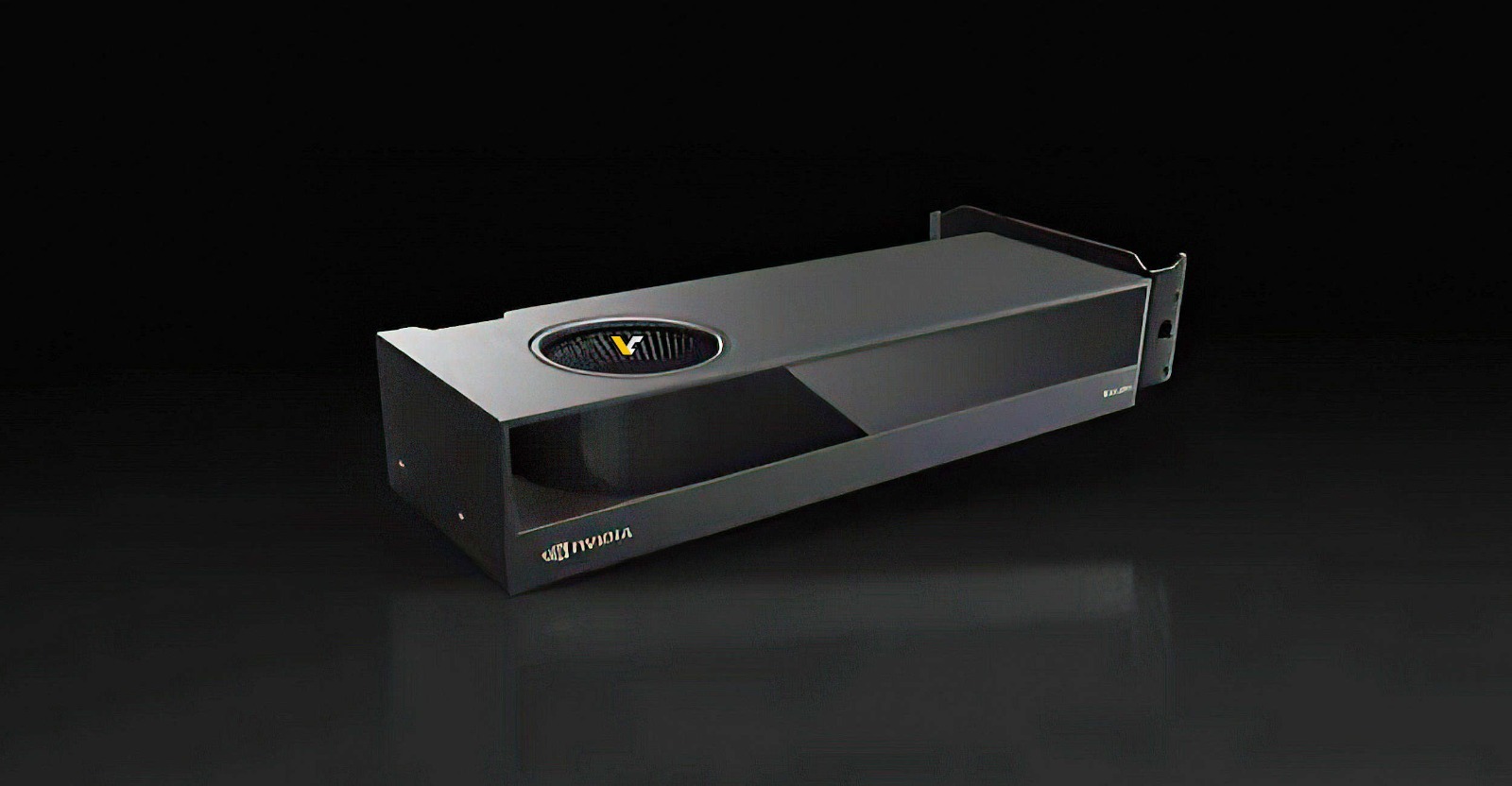
The demand for high-performance workstation GPUs continues to grow as industries embrace AI, 3D rendering, engineering simulations, digital content creation, and advanced visualization. Professionals today require graphics solutions that deliver exceptional power without consuming excessive energy or space. This is where the NVIDIA RTX 2000 Ada Generation stands out as a compelling choice.
Built on NVIDIA’s Ada Lovelace architecture, the NVIDIA RTX 2000 ADA delivers professional-grade graphics performance in a compact and energy-efficient form factor. It combines advanced ray tracing, AI acceleration, and large memory capacity to support modern workloads across industries such as architecture, manufacturing, healthcare, media production, and engineering.
For businesses seeking a reliable workstation GPU capable of handling demanding applications while maintaining efficiency, the NVIDIA RTX 2000 ADA represents an ideal balance of performance, power, and value.
Understanding the NVIDIA RTX 2000 ADA
The NVIDIA RTX 2000 ADA is part of NVIDIA’s professional RTX lineup designed specifically for workstation environments. Unlike consumer gaming GPUs, professional RTX cards are optimized for stability, certified drivers, enterprise reliability, and professional software compatibility.
Powered by the Ada Lovelace architecture, the GPU introduces significant advancements in rendering, AI processing, and computational workloads. NVIDIA designed the RTX 2000 ADA to address the growing need for compact yet powerful GPUs capable of accelerating complex workflows.
Key specifications include:
- 16GB GDDR6 ECC memory
- 2,816 CUDA cores
- 88 Tensor cores
- 22 RT cores
- PCIe Gen 4 support
- Low-profile dual-slot design
- 70W power consumption
These specifications allow professionals to work efficiently with large datasets, detailed 3D models, AI-assisted applications, and real-time rendering environments.
Why the NVIDIA RTX 2000 ADA Matters in Modern Workstations
Modern professional workflows are becoming increasingly GPU-dependent. Applications such as Autodesk Maya, SolidWorks, Blender, Adobe Premiere Pro, DaVinci Resolve, and AI-powered design software rely heavily on GPU acceleration.
The NVIDIA RTX 2000 ADA provides several advantages that make it highly attractive for professionals:
Compact Form Factor
One of the most notable features of the NVIDIA RTX 2000 ADA is its compact design. Many organizations deploy small form factor workstations due to limited office space or edge computing requirements. Traditional high-performance GPUs often require large chassis and significant cooling capacity.
The RTX 2000 ADA changes that equation by delivering workstation-class performance in a low-profile design suitable for compact systems. This flexibility allows businesses to deploy powerful graphics solutions in environments where space is limited.
Energy Efficiency
With a maximum power consumption of only 70W, the NVIDIA RTX 2000 ADA is remarkably efficient compared to larger workstation GPUs. This low power requirement reduces operating costs and simplifies deployment because many systems do not require extensive power supply upgrades.
For organizations scaling workstation deployments across multiple users, the energy efficiency of the NVIDIA RTX 2000 ADA can contribute to meaningful long-term savings.
Enterprise Reliability
Professional workflows demand reliability and stability. NVIDIA workstation GPUs are certified for many industry-leading applications, ensuring consistent performance and reduced downtime.
The ECC memory support in the RTX 2000 ADA also helps improve data integrity, which is particularly important for engineering simulations, scientific computing, and AI applications.
Ada Lovelace Architecture: The Technology Behind the Performance
The NVIDIA RTX 2000 ADA is built on the Ada Lovelace architecture, which introduces major improvements over previous generations.
Enhanced CUDA Core Performance
CUDA cores are essential for graphics rendering and parallel computing tasks. NVIDIA states that the Ada Lovelace architecture delivers significantly improved single-precision performance compared to previous workstation generations.
This translates into faster viewport rendering, smoother interaction with complex models, and improved simulation performance.
Third-Generation RT Cores
Ray tracing has become increasingly important for photorealistic rendering and visualization. The third-generation RT cores in the NVIDIA RTX 2000 ADA accelerate ray tracing workflows, enabling professionals to render realistic lighting, shadows, reflections, and materials in real time.
Architects, product designers, and visual effects artists benefit greatly from these capabilities because they can visualize designs more accurately before production.
Fourth-Generation Tensor Cores
AI integration is reshaping professional workflows. Tensor cores accelerate machine learning and AI-driven features within professional applications.
The NVIDIA RTX 2000 ADA leverages fourth-generation Tensor cores to enhance:
- AI-assisted rendering
- Image generation
- Video enhancement
- Noise reduction
- Automated design workflows
- AI model inference
This capability makes the GPU highly valuable for emerging AI-assisted creative and engineering applications.
Professional Applications That Benefit from NVIDIA RTX 2000 ADA
The versatility of the NVIDIA RTX 2000 ADA makes it suitable for a broad range of industries and applications.
3D Modeling and CAD
Engineers and designers working with CAD software require smooth interaction with complex assemblies and models. The GPU accelerates rendering and improves viewport responsiveness, enabling faster design iterations.
Applications that benefit include:
- SolidWorks
- Autodesk Inventor
- CATIA
- Siemens NX
- PTC Creo
The 16GB ECC memory is especially useful for handling larger models and reducing bottlenecks during intensive workflows.
Architecture and Visualization
Architectural firms increasingly rely on real-time visualization and ray tracing to present projects to clients. The NVIDIA RTX 2000 ADA allows architects to create immersive visual experiences with improved realism.
Real-time rendering tools such as:
- Lumion
- Enscape
- Twinmotion
- Unreal Engine
can fully utilize RTX acceleration to deliver enhanced visual fidelity.
Media and Entertainment
Video editors, animators, and visual effects professionals benefit from GPU acceleration in content creation workflows.
The RTX 2000 ADA supports:
- GPU-accelerated video editing
- Real-time playback
- AI-enhanced effects
- Faster rendering
- AV1 encoding and decoding
This makes it an excellent choice for studios seeking efficient professional graphics performance without deploying massive workstation systems.
AI and Machine Learning
AI workflows are no longer limited to large enterprise servers. Many businesses now run local AI inference and development workloads on compact workstations.
The NVIDIA RTX 2000 ADA supports AI-driven workflows such as:
- Stable Diffusion image generation
- AI-assisted design
- Machine learning inference
- Data visualization
- Edge AI deployment
Its Tensor core performance enables businesses to integrate AI acceleration into daily operations more effectively.
Comparing NVIDIA RTX 2000 ADA to Previous Generations
The NVIDIA RTX 2000 ADA represents a substantial leap forward compared to previous workstation GPUs such as the RTX A2000.
Improvements include:
- Higher AI performance
- Better ray tracing capabilities
- Improved memory efficiency
- Enhanced rendering speed
- Increased power efficiency
NVIDIA reports up to 1.6x performance improvements over the previous generation in several professional workloads.
These gains are especially important for organizations looking to extend workstation lifecycles while maintaining modern application compatibility.
The Importance of 16GB ECC Memory
Memory capacity plays a critical role in professional workloads. Large 3D scenes, AI models, simulation datasets, and high-resolution video projects demand substantial VRAM.
The 16GB ECC memory configuration of the NVIDIA RTX 2000 ADA provides several advantages:
- Improved handling of large datasets
- Reduced memory bottlenecks
- Better multitasking performance
- Enhanced reliability through ECC support
ECC memory helps detect and correct memory errors, which is particularly valuable in scientific, engineering, and enterprise environments where data accuracy is essential.
Ideal for Small Form Factor Workstations
Small form factor systems are becoming increasingly popular in professional environments due to their reduced footprint and deployment flexibility.
The NVIDIA RTX 2000 ADA is optimized for these systems because of its:
- Compact dimensions
- Efficient cooling
- Lower power consumption
- Quiet operation
This makes it suitable for industries such as healthcare imaging, financial analysis, industrial automation, and edge computing deployments.
NVIDIA RTX 2000 ADA and AI-Driven Workflows
AI is rapidly becoming a standard feature in creative and technical software. Applications now use AI for:
- Content-aware editing
- Generative image creation
- Automated rendering
- Simulation optimization
- Predictive modeling
The NVIDIA RTX 2000 ADA helps professionals leverage these features without requiring large-scale infrastructure investments.
Its AI acceleration capabilities make it highly relevant for future-ready workstations as organizations continue integrating machine learning into daily workflows.
Thermal Efficiency and Quiet Operation
Thermal management is another area where the NVIDIA RTX 2000 ADA excels. Compact workstations often face thermal constraints that can impact performance and reliability.
The RTX 2000 ADA’s efficient thermal design helps maintain stable performance while minimizing noise levels. This is especially beneficial in office environments, design studios, and medical facilities where quiet operation is important.
Scalability for Enterprise Environments
Enterprises often require scalable workstation solutions that can support multiple users across different departments.
The NVIDIA RTX 2000 ADA offers a practical balance between cost, performance, and deployment flexibility. Businesses can standardize workstation configurations while supporting a wide variety of professional applications.
Its lower power requirements also simplify deployment in environments where infrastructure limitations may prevent the use of larger GPUs.
Future-Proofing Professional Workstations
Technology evolves rapidly, and businesses need hardware investments that remain relevant for years.
The NVIDIA RTX 2000 ADA supports modern APIs, AI frameworks, ray tracing technologies, and GPU-accelerated applications that are shaping the future of professional computing.
Its combination of performance, efficiency, and AI acceleration positions it as a strong long-term investment for organizations seeking future-ready workstation solutions.
Choosing the Right Professional GPU
When selecting a professional GPU, businesses should consider several factors:
- Application requirements
- System compatibility
- Power consumption
- Thermal constraints
- Memory capacity
- AI workload demands
- Scalability
The NVIDIA RTX 2000 ADA addresses all these areas effectively, making it suitable for a broad range of professional users.
Organizations that require compact deployment, efficient performance, and enterprise reliability will find the GPU particularly appealing.
Where to Buy NVIDIA RTX 2000 ADA Solutions
Businesses seeking professional workstation GPUs should work with trusted technology providers that specialize in enterprise hardware solutions.
Saitech Inc offers access to professional NVIDIA workstation graphics solutions designed for demanding enterprise and creative workloads. Their extensive catalog supports businesses looking to upgrade workstations with high-performance NVIDIA RTX GPUs for AI, rendering, CAD, and visualization applications.
Conclusion
The NVIDIA RTX 2000 Ada Generation represents a significant advancement in compact professional graphics computing. By combining the power of the Ada Lovelace architecture with AI acceleration, advanced ray tracing, ECC memory, and exceptional energy efficiency, the GPU delivers a versatile solution for modern professional workloads.
From engineering and architecture to AI development and digital content creation, the NVIDIA RTX 2000 ADA empowers professionals to work faster, smarter, and more efficiently. Its compact design, enterprise reliability, and future-ready capabilities make it an excellent choice for organizations seeking scalable workstation performance without compromising space or power efficiency.
As businesses continue adopting GPU-accelerated workflows and AI-driven applications, the NVIDIA RTX 2000 ADA stands out as a practical and powerful investment for modern professional environments. For more information about professional NVIDIA workstation solutions and enterprise GPU deployments, contact us.
